New semester, new show, new DJ name! What better way to kick off being officially halfway done with college than to do a classic WKNC rebrand?
The Tangerine Hour with DJ Butter was by far my most successful show. I had call-ins all the time and found that it was so rewarding to give some classic rock to the station. One day, I got a call from a fellow DJ at WQDR 94.7. I forgot his name but his enthusiasm for music and WKNC will live in my heart forever. He mentioned to me how Shaw University used to have a Funk Friday show on WSHA 88.9, and he wished that there was some more of that groove on the college radio stations around Raleigh. Well, WQDR-DJ-whose-name-I-don’t-remember, your wish has been granted.
As toad maiden (my new DJ persona because DJ Butter was starting to annoy me), I decided to bring back the Tangerine Hour but with a funky twist. The ’60s and ’70s were such a prime era for fantastic music from all genres, and the influence that blues and funk had on popular rock was so important. In The Mellow Yellow Marsh, I want to highlight songs from those groovy decades that are entirely based in soul, funk and the blues. Whether they be from well-known artists like Jimi Hendrix that completely shook up conventional rock ‘n roll, or underground acts like Shinki Chen, The Mellow Yellow Marsh will include both familiar favorites and rare gems.
Intrigued? Tune into HD-1 every Friday from 1-2pm to hear me spin the funkiest tracks from the funkiest era. Here’s a sneak peek at my first setlist if you missed it:
1. One Room Country Shack – Shuggie Otis 2. I Need You So Bad – Magic Sam 3. What A Way to Die – The Pleasure Seekers 4. One of These Days – Ten Years After 5. Ogdens’ Nut Gone Flake – Small Faces 6. I Want You – The Troggs 7. Flying Bird – The Doves 8. Physical Love – Eddie Hazel 9. Buzzsaw – The Turtles 10. Eddie’s Rush – Ultimate Spinach 11. I Wanna Know If It’s Good to You – Funkadelic 12. Pali Gap – Jimi Hendrix 13. Let Me Ride – Ginger Baker’s Air Force 14. The Girl I Love She Got Long Black Wavy Hair – Led Zeppelin
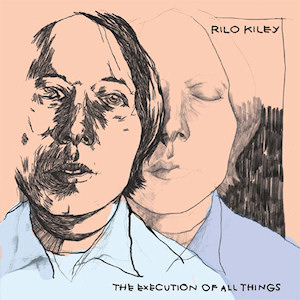
ALBUM: “The Execution Of All Things” by Rilo Kiley
RELEASEYEAR: 2002
LABEL: Saddle Creek
RATING: 10/10
BESTTRACKS: “The Execution Of All Things” “A Better Son/Daughter” “Spectacular Views”
FCC: None
I first heard “The Execution of All Things” at some time during the simultaneous infinite expanse and blip of time that was quarantine/lockdown in 2020. Instantaneously, it became one of my favorite albums of all time and solidified Rilo Kiley as one of my favorite bands ever, although this was the first project I ever listened to by them.
Jenny Lewis’ voice was made for indie-rock. I’ve tried listening to other projects of hers, but Rilo Kiley will forever be my favorite. Blake Sennett and her made magic with Rilo Kiley, and not much will ever compare in my opinion.
“The Execution Of All Things” is one of those albums that makes me wish I was a teenager in the early 2000s, instead of being just a mere year old at the time this album was released. It makes me envy those who were able to be angsty and mad at the world at the turn of the millennium.
“The Good That Won’t Come Out” is one of my favorite introductory album tracks, ever. It sets the gather-round-the-campfire nature that seems to float in and out of the record with grace. The album touches on themes like failed love, anger at the government, hopelessness, California, anxiety and friendship.
Perhaps the best (or at least my favorite) aspect of this project is that it is tied together with a song called “And That’s How I Choose To Remember It.” Fragments of the song punctuate the end of “So Long,” “My Slumbering Heart,” and “Spectacular Views.” Fans have strung it together, but it was never released as an individual track. The lyrics focus on Lewis’ childhood, her parent’s divorce and how to process that all. With production sounds like a lullaby or a dream, it perfectly reflects what it’s like to remember childhood.
Anything else I say will be repetitive and I’ve written plenty about my adoration for this band, so instead I will leave you with a collection of my favorite lyrics from the album:
“You’re weak, but not giving in / And you’ll fight it, you’ll go out fighting all of them” — “A Better Son/Daughter”
“And it’s become just like a chemical stress / Tracing the lines in my face for / Something more beautiful than is there” — “My Slumbering Heart”
“And I hope that you close your eyes / Block out the pain of a thousand lives /I hope that you die tonight / Just close your eyes, there goes the light / Smile, I’ll brave it while you wave your hand” — “Three Hopeful Thoughts”
“You never knew why you felt so good / In the strangest of places / Like in waiting rooms / Or long lines that made you late / Or mall parking lots on holidays” — “Spectacular Views”
“Then you ask / “What’s a palisade?” / And if we’re too late / For happiness” — “Spectacular Views”
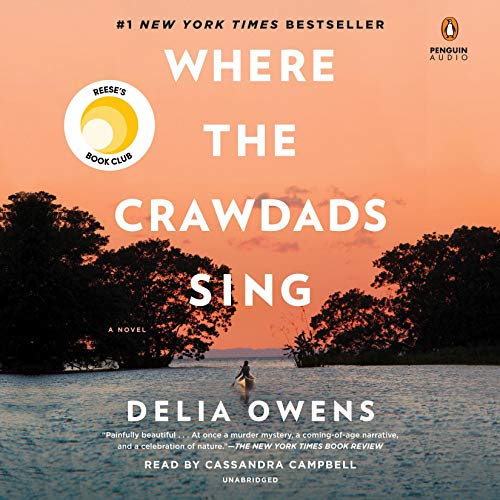
There’s honestly nothing better than sinking your teeth into a fantastic book over summer break. I picked up “Where the Crawdads Sing” at their airport before a family camping trip on a whim and it was one of the best decisions I’ve ever made.
Published in 2018 by Delia Owens, the novel, set in the late ’50s and early ’60s, follows the life of a girl named Kya. Left to fend for herself by her family, she lives completely alone in the marsh of North Carolina, surviving off mussels, fishing, and her love of nature. Around Barkley Cove, the small town she lives by, she’s known as the “Marsh Girl,” and is generally shunned by the community. Her isolation continues until her teens and early twenties when two young men stumble upon her shack hidden in the marsh. When one of these men is murdered, Kya is suspected immediately. As quoted by the New York Times Book Review, “Where the Crawdads Sing” is a “murder mystery, coming-of-age narrative, and a celebration of nature” all at once.
Kya is a fascinating character. After being abandoned by her family members one by one, her complete isolation leaves nothing but nature alone to raise her. As a result, she is highly intelligent to the environment surrounding her, despite her inability to read and having never gone to school. But, as all humans do, she craves love, touch and companionship, leading her to enter into two relationships with the boys from the Barkley Cove. She learns trust, heartbreak and love from these encounters, but it is apparent the neglect she faced throughout her life will forever mark her as “different.”
Delia Owens, a wildlife scientist by profession, wrote “Where the Crawdads Sing” as a reflection of her time spent in Africa, where she was completely isolated for months on end while doing research. Though “Where the Crawdads Sing” is neither about Africa or wildlife scientists, Owens wanted to write about what would happen to a woman left utterly alone for nearly her whole life.
The way she crafts the novel is fantastic, jumping back and forth between the murder investigation in 1969 and Kya’s adolescence in the ’50s. It all comes together in a satisfying, heartwrenching and completely unexpected way. I won’t say any more on that, but just know that your pulse will be racing and your jaw will be on the floor.
“Where the Crawdads Sing” is by far the best book I’ve read in a long time. It has a little bit of something for everybody and is beautifully written. If you’re looking for your next summer read before fall officially sets in, look no further.
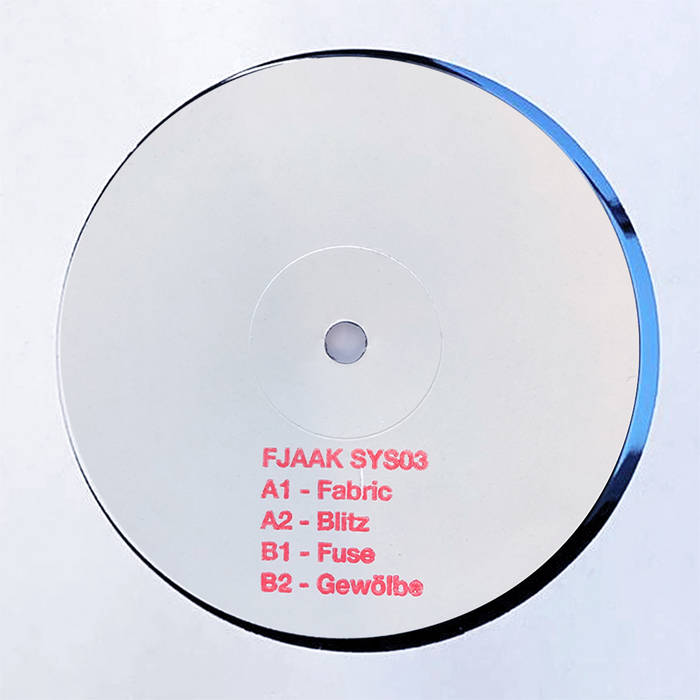
Berlin based duo FJAAK is back with their new EP “SYS03”, the third installment in the “SYS” series. It’s no secret that clubs all over the world have struggled to stay financially afloat amidst the current COVID-19 pandemic. Seeing an opportunity to give back, FJAAK created the “SYS” series, a charity project where four club-titled tracks are released with all revenue generated going directly to the four clubs. The clubs featured in “SYS03” are London based Fabric, Munich based Blitz, Brussels based Fuse, and Cologne based Gewölbe.
The idea behind the whole project makes each individual track and EP installment a unique listening experience. Before playing the opening track “Fabric”, I decided to search for a couple images of the dancefloor. Hearing the heavy and slightly reverberated bassline as the track played, I envisioned the bass vibrating and reverbing off the brick walls, the subtle melody kick-in drawing oohs and ahs from the crowd. For a club that looks like a residential brick house, it perfectly encapsulates the atmosphere. I followed my same process for the second track “Blitz”. While maintaining the similar heavy bassline form “Fabric”, the melody is much more pronounced with vocal echoes and hi-hats alongside an almost euphoric synth breakdown. Located in a former museum hall with two dancefloors, two bars, and a vegetarian restaurant, Blitz is a world away from the underground basement setting of Fabric and FJAAK’s ability to portray this juxtaposition throughout the EP is why I gave “SYS03” an 8.5 out of 10.
I have proudly done my part in supporting these clubs and many others by purchasing all three installments, and I hope you will all do the same.
It’s Hopscotch season in the Triangle! Hopscotch is returning to downtown Raleigh for its eleventh year on Sept. 9-11.
WKNC has partnered with NC State University Libraries to present our 2021 official Hopscotch Day Party, on Sept. 9, from noon to 3 p.m. Occurring outside of DH Hill Jr Library facing Hillsborough Street, this event is free and open to the public; you don’t need a ticket to Hopscotch to attend.
The party is not only a showcase of North Carolina electronic musicians but also of WKNC alumni talent; every performer has been involved with WKNC in the past. We’re excited to welcome back former DJs and staff to the campus.
The event will be live-streamed via NC State University Libraries’ Twitch channel.
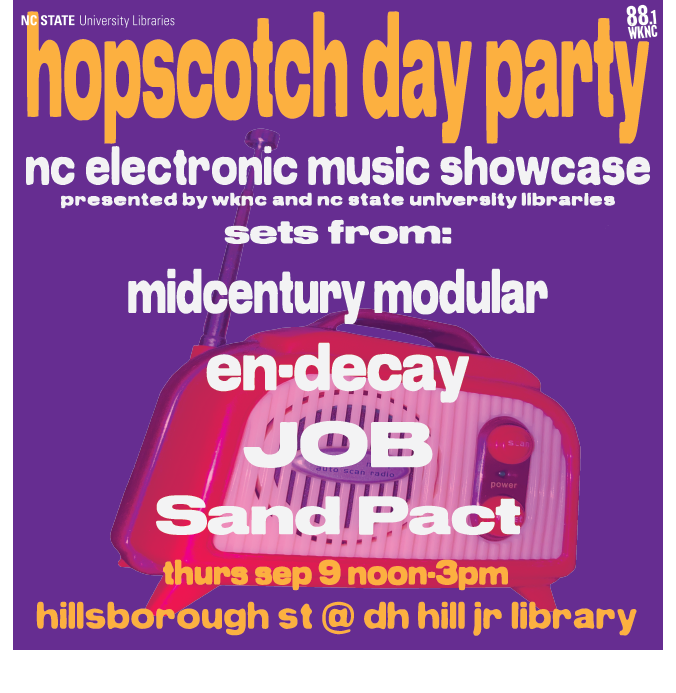
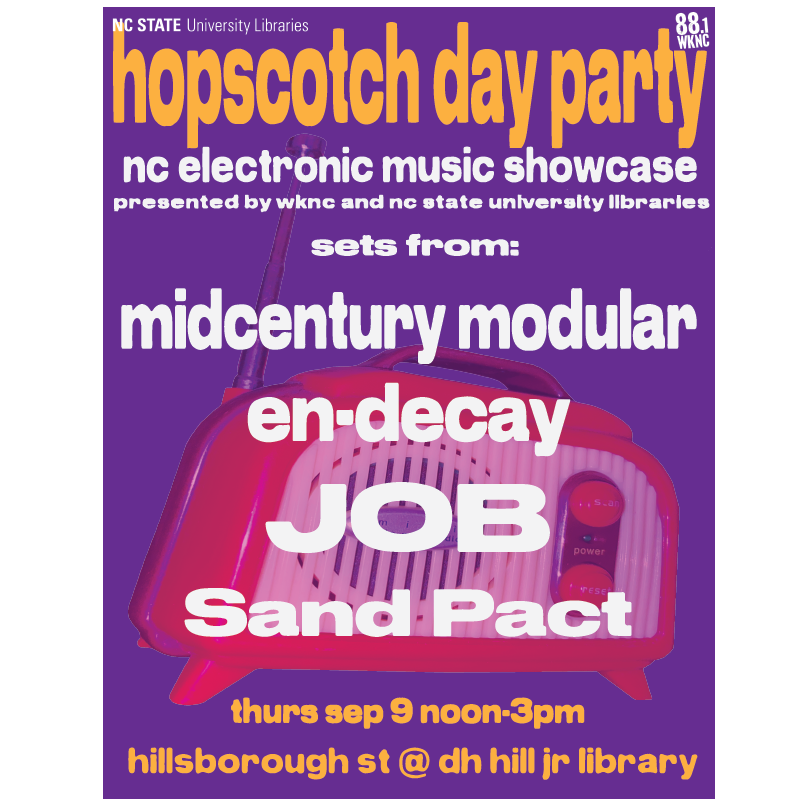
Check out the official flyer below, and read on to get a short bio of each of the musicians, written by WKNC General Manager Maddie.
WKNC and NC State University Libraries Hopscotch Day Party with midcentury modular, en-decay, JOB and Sand Pact. Design by Maddie.
The lineup is designed in a way to start on the more chill and ambient side of electronic, and slowly turn heavier by the end of the showcase.
Starting off the showcase is midcentury modular. midcentury modular was a WKNC DJ for 3 years between 2011 and 2014, as well as working with our Daytime music block. As the name might suggest, midcentury modular makes modular synth music, exploring the various environments that can be created. Some of his work, like the release “snow,” is more sparse and desolate, while others, like the release “a weekend,” play around with beeps and boops to create a fun, uplifting atmosphere. I’ve always wanted to see a modular synth performance and I’m excited to watch his set.
Changing paces next is en-decay. Cyrus has been producing electronic music and DJing under the name en-decay since 2012, making glitchy, IDM-like music that also takes inspiration from various other electronic genres, such as industrial or ambient. They started working as a freelance DJ for events in high school then as an Afterhours DJ for WKNC for 2 years. They’ve collaborated with a variety of artistic groups such as Windhover, Sinetology, and Maison Fauna, planning and playing events and festivals around North Carolina. They’ve been uploading releases since 2017 to their Bandcamp page, so have fun browsing for a bit.
Next is JOB. JOB started DJing at WKNC in the spring of 2019. In the summer of 2019 he hosted a Sunday underground show called Clocking Out. He also helped record a few live sessions in The Lounge. JOB’s music consists of super fun and fast-paced mixes, consisting of artists like Toro y Moi, Azealia Banks and Ariana Grande. His bio on mixcloud simply says “girls + gays only”, if you can’t already tell what his musical vibe is based on the aforementioned artists. I am very much ready to dance to this set.
And lastly, we have Sand Pact. Hema of Sand Pact was involved with WKNC from 2014-2018, in which she worked as a DJ (first as DJ iCloud, and later as Gudiya), graphic designer, and promotions director, as well as began the WKNC zine. Hema invited Alex onto her DJ sets and the two began their love for playing electronic music together. I discovered Sand Pact a few years ago when I was trying to discover more Triangle-based artists, and I really dug their sound and entire aesthetic. They have a pretty harsh sound, consisting of various strange noises layered over industrial beats. I’m super happy to have them play this set, as I’ve been wanting to see how their live show looks ever since I first discovered them.
I hope you discovered your new favorite North Carolinian electronic musician, and are able to come out to our showcase.
Parties. There’s nothing else like them. After a long week of classes, work, and stress, dancing and talking without having to put in much effort is a welcomed experience. Beyond the space, people, drinks, and lighting, one of the most important aspects of a party is the music.
I don’t claim to know how to make the perfect party playlist, but I do have a few ideas. First, make it collaborative. When there’s multiple people contributing to the playlist, you’re almost guaranteed that there’s going to be enough variety to satisfy everyone at the party at some point or another. Second, a good mix of electronic, grunge, throwback, and joke songs (that aren’t really joke songs because everyone loves them) makes for a great time. Finally, I’d recommend keeping the music loud enough that you can’t make out anyone’s conversation but your own, but quiet enough that you don’t get a noise complaint.
For some party playlist ideas, check out my playlist below (inspired by a real collaborative party playlist I recently made with some friends):
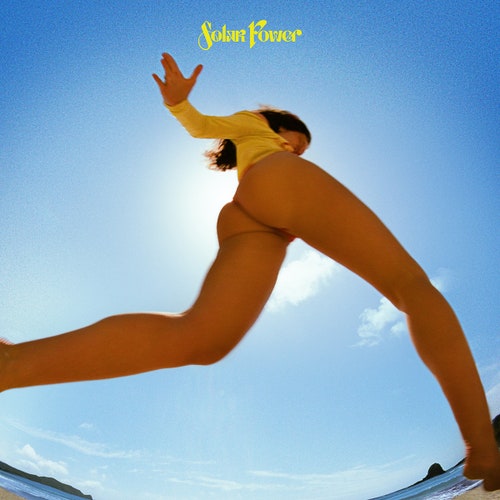
Lorde is notorious for the story-like nature of her albums, often starting and ending an album with similar or juxtaposed themes. On her debut record, “Pure Heroine,” she begins the first track with “Don’t you think that it’s boring how people talk?” and ends the final track with the line “But people are talking, people are talking / Let ’em talk.” And on her sophomore album “Melodrama,” she tells the tale of a house party. The concept for her brand new album, “Solar Power”? Nature. In 2019, Lorde visited Antarctica and that trip bore her memoir/photo-book “Going South.” The book was released in June 2021 as a “precursor” to “Solar Power.”
It seems to me that Lorde’s proven superb ability to procure cohesiveness has leaned more into sonic repetitiveness this time around. The production, done by Lorde, Jack Antonoff and in part by James Ryan Ho (better known as Malay) leaves something to be desired. I understand that not every album is going to be as blatantly over-the-top pop as fan favorite “Melodrama,” but the whole album falls one step short of whole, and is almost too understated.
However, songwriting is one area in which I’m convinced Lorde will never fall short. “Secrets from a Girl (Who’s Seen It All),” “The Man with the Axe” and “Big Star” are the three lyrically strongest tracks on the record. The following is a collection of my favorite lyrics from the album:
“I should’ve known when your favorite record / Was the same as my father’s you’d take me down” — “The Man with the Axe”
“Couldn’t wait to turn fifteen / Then you blink and it’s been ten years / Growing up a little at a time, then all at once / Everybody wants the best for you / But you gotta want it for yourself, my love” — “Secrets from a Girl (Who’s Seen It All)”
“I used to love the party, now I’m not alright / Hope the honeybees make it home tonight” — “Big Star”
“In the future / If I have a daughter / Will she have my waist / Or my widow’s peak? / My dreamer’s disposition or my wicked streak?” — “Oceanic Feeling”
And it does possess the aforementioned circularity that her previous albums boast. The first track, “The Path” begs the audience to understand that she is not a savior nor a messiah (despite her stage name). “Oceanic Feeling,” the closing song, ends with the lyric “… I’ll know when it’s time / To take off my robes and step into the choir.”
Aside from the previously mentioned production collaboration, the album also contains much collaboration with other artists. Clairo, Phoebe Bridgers, Lawrence Arabia and Marlon Williams provide backing vocals on numerous tracks. Swedish musician Robyn, co-wrote and did the spoken outro on “Secrets from a Girl (Who’s Seen It All).” Jack Antonoff also has songwriting credits on eight of the twelve tracks.
Fan and critical reception has been decent but far below par for a Lorde album. In my opinion, she had a vision and executed it, which is all you can ask for in art. She wasn’t trying to make another “Melodrama,” she was trying to make “Solar Power,” and she did just that.