In this episode of “More Than You Think!” we discuss how companies like Coachella, Live Nation, and Hybe are destroying the artistry of music and ruining the live music experience for real fans.
Do you have a favorite bird? Come on, everyone does. Yours just might not be real… This episode, Abby becomes the robot bird expert and Matthew tries to sell merch.
On this episode of That’s What They Said, join hosts Julia and Kieran as they discuss navigating the transition from final exams to summer break to class in the fall. Change is scary but our hosts are brave and strong (their summer plans include working and taking classes and resting). Listen to their life updates, opinions on turtles vs. frogs, and their desire to host a farmers market party.
Breyton Hill discusses the history of Earth Day on April 22 and how it came to be one of the largest secular holidays in the world. The theme of Earth Day 2026 is Our Power, Our Planet, which according to EarthDay.org, reflects a fundamental truth: environmental progress doesn’t depend on any single administration or election. It’s sustained by daily actions of communities, educators, workers, and families protecting where they live and work. Breyton invites all of the listeners to get involved in their community for Earth Day and celebrate the beauty that is living on this planet.
In this episode of “Eye on the Triangle,” Evie Dallman and Amanda Levinson discuss the arts’ place in exciting civic engagement and ways communities can continue restoration within the individual as well as larger bodies of people. We talk radical rest, laborers’ rights and artistic action.
In our second story, Evie chats with the North Carolina Museum of Art’s Head Librarian, Andrew Wang, about North Carolina book culture, zine culture, DIY movements, the NCMA’s library as a source for research and media, grassroots efforts in publication and media representation and the End Paper Book Fair’s place in these ideas.
Finally, we close out with Evie’s interview with Kid Lab creators Shannon Newby and Susan Kelly on their initiatives to give kids access to arts education and principles of making with recycled goods.
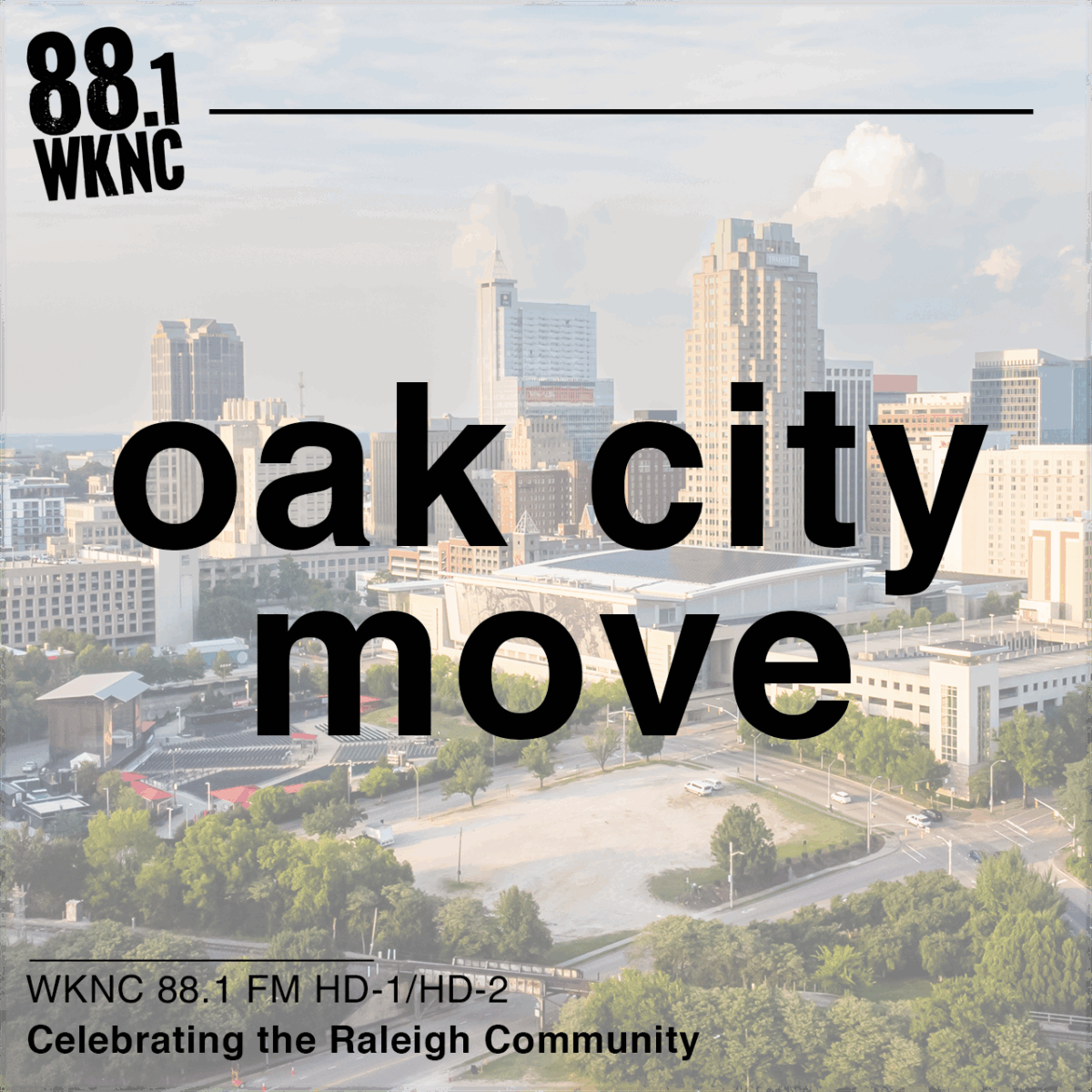
Raleigh cityscape by Abhiram Juvvadi, CC BY-SA 4.0.
In this episode, I interview Jenn McEwen, the director of Wake on Stage. We discuss how the program brings together talented students and community groups from across Wake County to showcase their creativity and passion for the arts. Jenn shares the story behind how Wake on Stage began, what inspired her to create a platform for young performers, and how the event has grown into a celebration of artistic talent in the community.
Throughout the conversation, we talk about the wide range of performances featured at Wake on Stage, from music and dance to theater and other artistic expressions. Jenn also explains the importance of giving students opportunities to perform, collaborate, and gain confidence while sharing their talents with a larger audience.
Breyton Hill attends Brain Night at the North Carolina Museum of Natural Sciences. As she explores, she talks to researchers, volunteers, and community members all attending or tabling for Brain Night. Chris Smith, the museum’s Coordinator of Current Science Programs explains more about what Brain Night is. The 2026 keynote speaker was Dr. Christa Baker and her postdoc, Dr. Alexandra Venuto, talks about their research in fruit flies. Attendee Zachary Henderson visited their table and shares what he learned. NC State University researcher Dr. Kurt Marsden shares about his work studying zebrafish and how they are surprisingly genetically similar to humans. Dr. John Meitzen’s table always has real human brain specimens for visitors to hold. Julia Janosko shares how humbling it is to hold what was someone’s consciousness in the palm of your hand. Emily Philips and Ranganath Gopalraj talk about the Neuroscience Club at NC State and how Brain Night is “their Super Bowl.” Once again, Chris Smith leaves us with his favorite part of Brain Night: holding a real human brain and nerding out with experts.
Raleigh cityscape by Abhiram Juvvadi, CC BY-SA 4.0.
In today’s episode, Sophs sits down with Emily Foster, the Co-Director of the Full Frame Documentary Film Festival taking place in Durham April 16th–19th. We talk about the great new films and filmmakers that will be showcased, what makes this year’s lineup especially exciting, and how the festival continues to be a vital platform for documentary storytelling.
Emily also shares insights into the curation process, highlights a few must-see premieres, and offers tips for first-time attendees looking to make the most of their festival experience. We wrap things up with a look at how documentary film is evolving and why events like Full Frame remain so important for both creators and audiences alike.
In this episode of “That’s What They Said”, Julia and Kieran dive into the nooks and crannies of ethical AI use, managing exam-heavy weeks, and their summer plans. They brainstorm combo nicknames and discuss the importance of Sonic slushies in the social life of rural North Carolinians aka Kieran.
In this episode of “More Than You Think!” we discuss why ignoring the drastic weight loss of our favorite female celebrities is even more harmful and less feminist than staying silent about women’s bodies.
for, Hospital. “Women’s Health Is Chronically Understudied and Underfunded. It’s Time for a Change.” Women’s Health Is Chronically Understudied and Underfunded. It’s Time for a Change , Hospital for Special Surgery, 5 Dec. 2025, news.hss.edu/womens-health-is-chronically-understudied-and-underfunded-its-time-for-a-change/.
Holmes, Su, et al. “Feminist Approaches to Anorexia Nervosa: A Qualitative Study of a Treatment Group.” Journal of Eating Disorders, vol. 5, no. 1, 13 Nov. 2017, jeatdisord.biomedcentral.com/articles/10.1186/s40337-017-0166-y, https://doi.org/10.1186/s40337-017-0166-y.
Munshi, Atul, et al. “Gender Bias in Cardiovascular Disease Prevention, Detection, and Management, with Specific Reference to Coronary Artery Disease.” Journal of Mid-Life Health, vol. 12, no. 1, 17 Apr. 2021, p. 8, https://doi.org/10.4103/jmh.jmh_31_21.
National Cancer Institute. “Oral Contraceptives and Cancer Risk.” National Cancer Institute, Cancer.gov, 22 Feb. 2018, www.cancer.gov/about-cancer/causes-prevention/risk/hormones/oral-contraceptives-fact-sheet.