
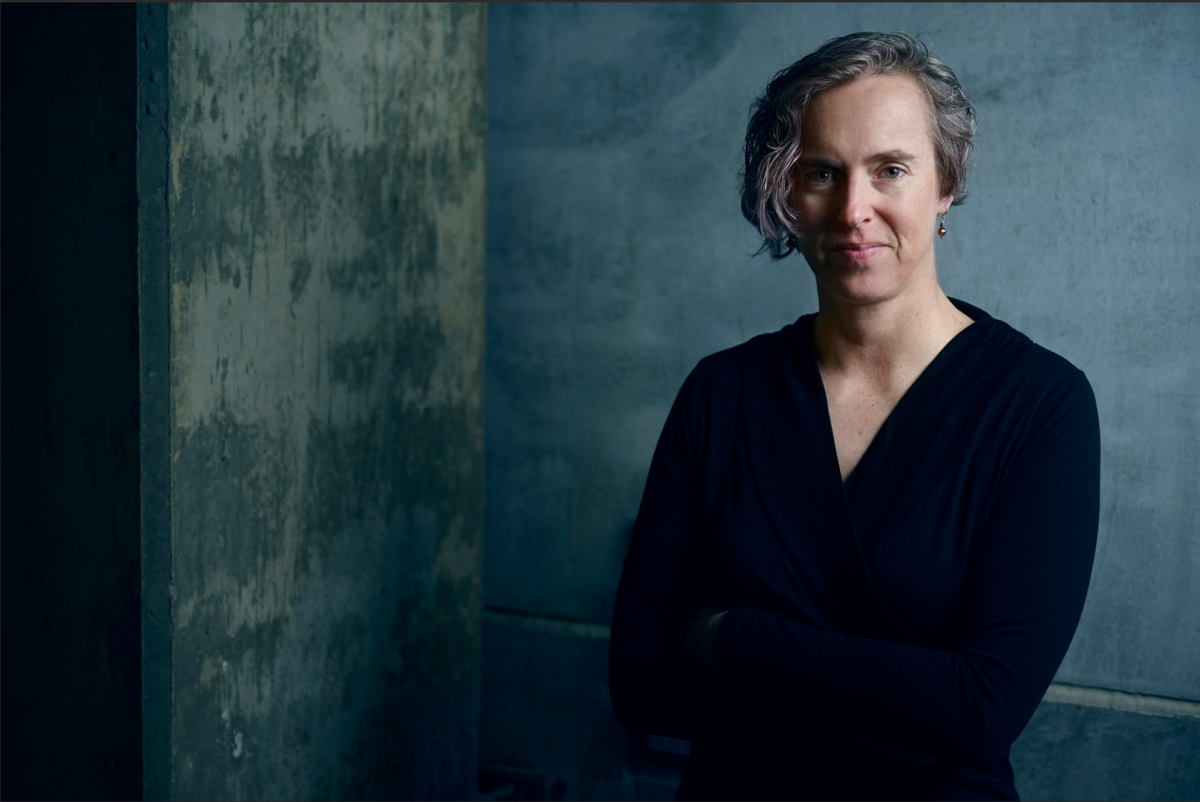
Once again, I attended the Arts NOW Series for one of my classes. Instead of a lecture recital, Dr. Andrea Cheeseman performed a one-act opera from a three part series of one-act pieces. This show was different than one might expect from this description, but it did not disappoint.
The concentration of the show was on computer music. First, let’s cover what computer music is. From the title, you can assume that it is music made with a computer which would be correct. That being said, it’s more complicated than using a computer program to make a song like Logic Pro of Ableton. It’s more akin to using various synthesis and algorithmic techniques to make music with a computer. A recognizable example of this would be “Daisy Bell” programmed by Max Matthews at Bell Labs in 1961, originally written by Harry Dacre in 1892.
To start the show, two pieces of computer music were played from a recording. The first was called “Three Sonic Spaces II” by Laurie Spiegel in 1988. Laurie Spiegel is known for using techniques such as mapping, which is essentially assigning sound values to different parts of a medium. An example of this would be tracing the heights of buildings, such as what Heitor Villa-Lobos did to the New York City skyline. The second piece was called “Sand and Sky” by Sameer Ramchandran in 2017. These two pieces served as a prelude to the computer music that was to come. I think they were a good introduction to the performance.
Dr. Andrea Cheeseman presented a completely different performance. I did know that we were going to be experiencing a blend of live clarinet and computer music with an operatic recitation. That being said, I was expecting the opera part to be an excerpt at the end with most of the performance being original pieces by Dr. Cheeseman herself. Despite this, I was not disappointed.
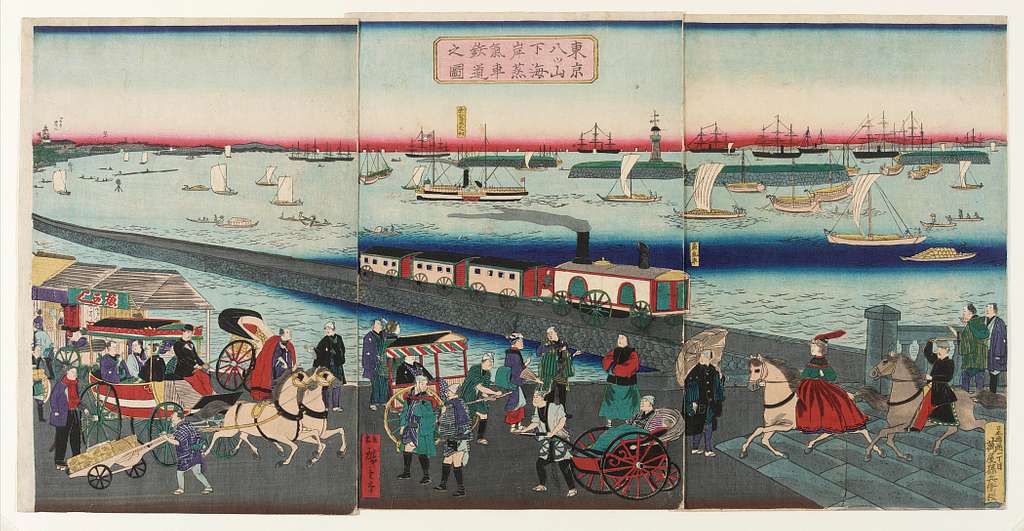
The opera performed was one third of a trilogy called “Invited Ghosts,” composed by NC State’s very own Dr. Rodney Waschka II. This trilogy is made up of “Saint Ambrose,” “Sappho’s Breath” and “Seven Views from Yokohama.” “Saint Ambrose” is based on the life of Ambrose Bierce, American poet and author, and is intended to be performed as a computer music piece in tandem with a live saxophonist and visuals in the background. “Sappho’s Breath” is based on the life of Sappho, Ancient Greek poet, and is intended to be performed as a computer music piece in tandem with a soprano singer with visuals in the background. Lastly, “Seven Views from Yokohama” is based on the life of Hiroshige II, Japanese ukiyo-e (“pictures of the floating world”) artist, and is intended to be performed as a computer music piece in tandem with a live clarinetist with visuals in the background as well as several monologues intermittently. This last part was the one performed at the Arts NOW Series recital.

I found the story of the Hiroshige II character to be simple, yet one that I don’t feel needed anything to make it better. Given the setting in history, a simpler story would probably be preferred. However, the monologue was not the only part of the story. I could feel new information being conveyed within the clarinet and computer music duet. On several occasions, the computer music created percussive beats that I noted to have sounded very human. Part of that might have been the accompaniment of the clarinet but I think the computer music often had a very different feel than the clarinet. I felt that these differences made the simplicity of the story have significantly more dimension. Something that I think is a common lesson is that not only is it normal to feel more than one emotion at once, but sometimes it’s necessary.
Essentially, the story started with the character as a child showing some aptitude for art and design. His father ended up taking the risk and apprenticing him to the famous artist Hiroshige. The character regails his progress in his apprenticeship and his new life in the bustling big city. Eventually, the character’s skills grow enough that he begins to make a name for himself, taking the name of his mentor after his death to become Hiroshige II.
I was a little saddened that the story concluded with a rather sad ending. Things seemed to be going really well for Hiroshige II with his mentor basically adopting him and his art taking off and eventually marrying a beautiful woman (although I don’t love the fact that it was most likely against her will). He was getting everything that he could ever want in his life until his wife left him for another man. From her perspective, I can understand that she likely didn’t have a choice in her original marriage and was looking for an escape. Unfortunately, she found herself in a situation where she was stuck with a terrible spouse who decided he was the rightful heir of the Hiroshige name and tacked on a III to the end. From Hiroshige II’s side of things, I understand why he fell into a depressive episode but it saddens me that he couldn’t pull himself back up. His art declined in quality and while he did remarry, he never found quite that happiness again. A quote that really stuck with me from the show was “Only a mediocre artist is always at his best.” I feel that this quote encapsulates the human experience because no matter what we do, there is always a certain unpredictability about life.
I think that the computer music was very interesting. I find myself wondering which technique was used, as the class for which I went to this performance focuses on computer music and the different techniques throughout history that are still used in the present. I found some of the sounds to be very menacing and others to be extremely whimsical in nature. Sometimes the clarinet provided the melancholic feel or the whimsical. Regardless, I enjoyed the show and wonder a lot about the thought process behind the writing of such a series of pieces.
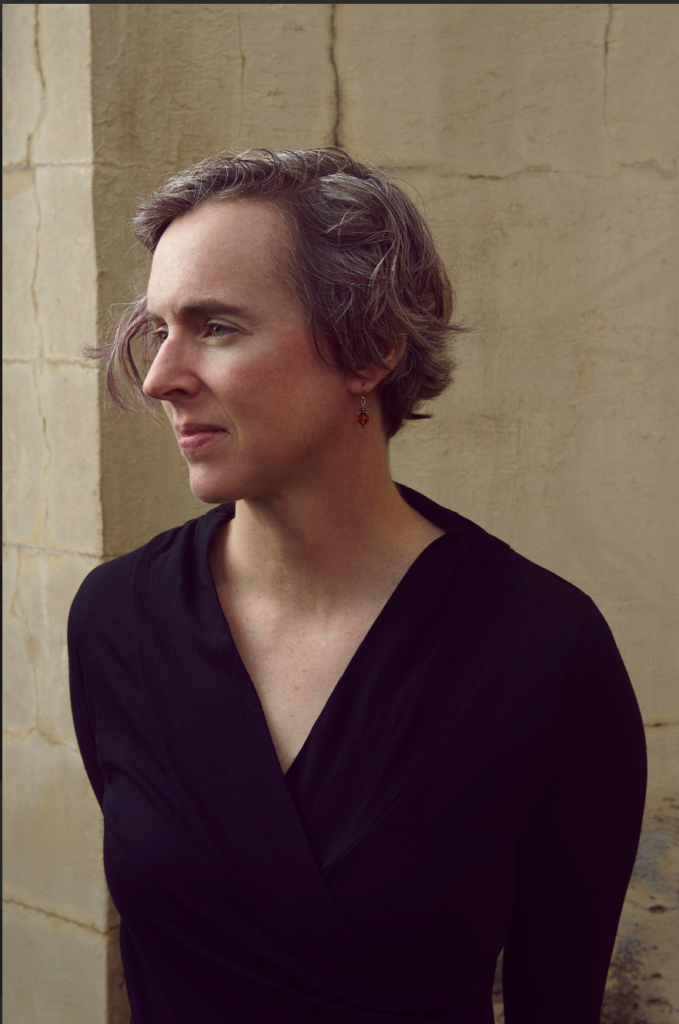
Moving away from the piece and toward the performance, I really enjoyed Dr. Cheeseman’s performance. She alternated between standing and monologuing, a generally melancholic feel to me with some humor sprinkled around the edges, and being seated with her clarinet. Some of the clarinet parts sounded more complicated than others but Dr. Cheeseman very clearly knew what she was doing. She executed the performance with a computer music background very fluidly. The two parts meshed together differently for each piece but overall themes still remained from the first arias to the last. I noticed Dr. Cheeseman consistently attended to her instrument between arias and monologues, such as cleaning the instrument and blowing out moisture and adding a mouth-piece cover every time.
From what I can tell, playing with a computer music accompaniment is not simple. There are more subtle cues in the music to tell the musician what to do next and when. I found the performance, especially with the dichotomy of the two parts in places, to be moving. In some places, as noted above, the clarinet was very slow and melancholic with the computer music being jumpy, upbeat and what I would characterize as whimsical in nature. At times, it was reversed in some ways. The clarinet would be fun and whimsical while the computer music would have more mysterious or menacing even percussive feelings. I felt that Dr. Cheeseman presented those emotions in the music very well and I could feel all the conflict, hardships and joy throughout the show.
Having attended both of the Arts NOW Series shows for this year, I would recommend these unique performances and presentations. They would be of interest to anyone who has an interest in music history and unique music composition styles. Should I be able to, I plan on attending the next Arts NOW Series event.
— dj dragonfly
