
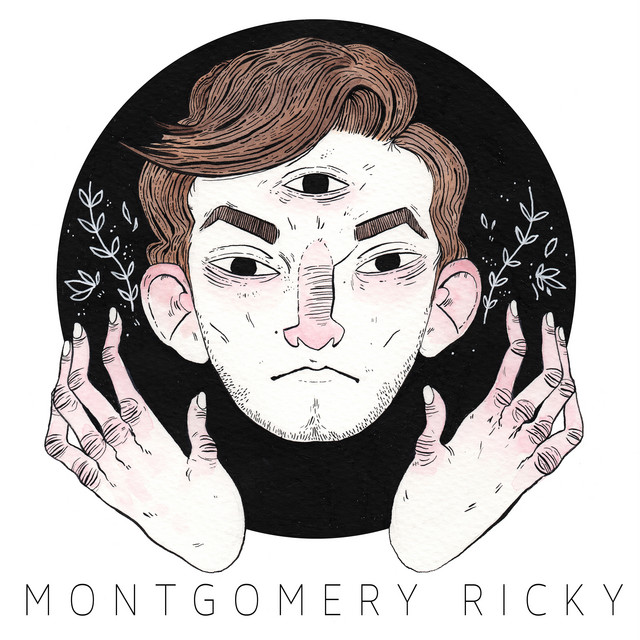
Ricky Montgomery is an artist who is overplayed in the niche he created… for good reason.
If you were a Millennial or Gen Z with working internet and access to TikTok during 2020, I can guarantee you’ve heard Montgomery’s hit singles “Mr. Loverman” and “Line Without a Hook” at least once.
Wait…Who is Ricky Montgomery?
But for those of you who are unfamiliar, Montgomery is an American singer and songwriter who composes music of the indie alternative pop rock variety. Today, his song “Line Without a Hook” has more than 840 million streams on Spotify and 200 million views on Youtube, with runner-up “Mr. Loverman” at 829 million streams and 70 million views as of December 2025. While both songs were already available in 2016, they only skyrocketed Montgomery to fame four whole years after their release. It isn’t hard to see why.
“Line without a Hook” is gut-wrenching and beautiful rock ballad with six unique verses; much like the lyrics reference the singer as an ocean, the song lapses between heartfelt lullaby and heartbroken belting like the roiling cycles of sea waves. By contrast, “Mr. Loverman” is a tender and aching serenade across the linoleum tiles of a dimly-lit high school gymnasium. It speaks to how affectual “Mr. Loverman” is that it would be a perfect song to have at anywhere from a school formal to a wedding’s first dance.
Montgomery Ricky: The Good
These songs are track 2 and 8 respectively in Montgomery’s album “Montgomery Ricky,” but like all diamonds in the rough, they do tend to make the “rough” stand out all the more.
Make no mistake, “Montgomery Ricky” is a charming album. Each of its songs carry his highly recognizable “indie” signature: warmly smooth guitar tone, energetic bopping drums, and soulfully earnest vocals.
Notably, Montgomery is at his absolute best when his songs read like confessions. Track 1: “This December,” track 7: “My Heart is Buried in Venice,” and track 10: “Snow” are where Montgomery’s expertise in evoking power and emotion shine brightest. “Snow,” especially had the potential to reach the highs of “Line Without a Hook.” It’s certainly a moving song, but it falls just short of being a tear-jerker.
Holistically, the rest of the album is fun and solid enough; “Cabo” is an ear worm, “Last Night” has an engaging narrative, and “Get Used To It” is highly relatable. There isn’t a single terrible song in the collection.
Montgomery Ricky: The Bad
Well, except for “Don’t Know How” and “California.”
Because I know how good Montgomery can sound, I was unpleasantly surprised experiencing both songs for the first time—these tracks represent my biggest issues with “Montgomery Rickey.” “Don’t Know How” and “California” are, for lack of better descriptors, impersonal and generic.
“Don’t Know How” is a rote 80s melody that boredly decided to be neither fast or slow. It varies very little in verse structure and emotional intensity unlike the way Montgomery’s better songs do.
“California” is a catchy, but like “Don’t Know How,” it follows a very simple progression with little payoff to the repetitive and cliched message of its lyrics.
Above everything, these two songs feel like pieces Montgomery added to be filler. While disappointing, it doesn’t change the fact that the album comprises of two excellent, three great, and two other good pieces, but it goes to show how empty Montgomery’s songs feel without his intimate personal touch.
Is it Worth (It) a Listen?
In retrospect, “Montgomery Ricky” is a good album that represents the staggering potential that Montgomery can have creating moving and catchy music. Reviewing this album has made me eager to check out his most recent works and whether he’s grown into what makes his music special.
I rate “Montgomery Ricky” a 7.5/10. If not a single song in the album can leave you with a lump in your throat, I only imagine you will be one of the only people strong enough to survive Armageddon.
If nothing else, “Line Without a Hook” has my glowing recommendation—it’s a song you have to listen to at least once in your life.
— Killian Le
