
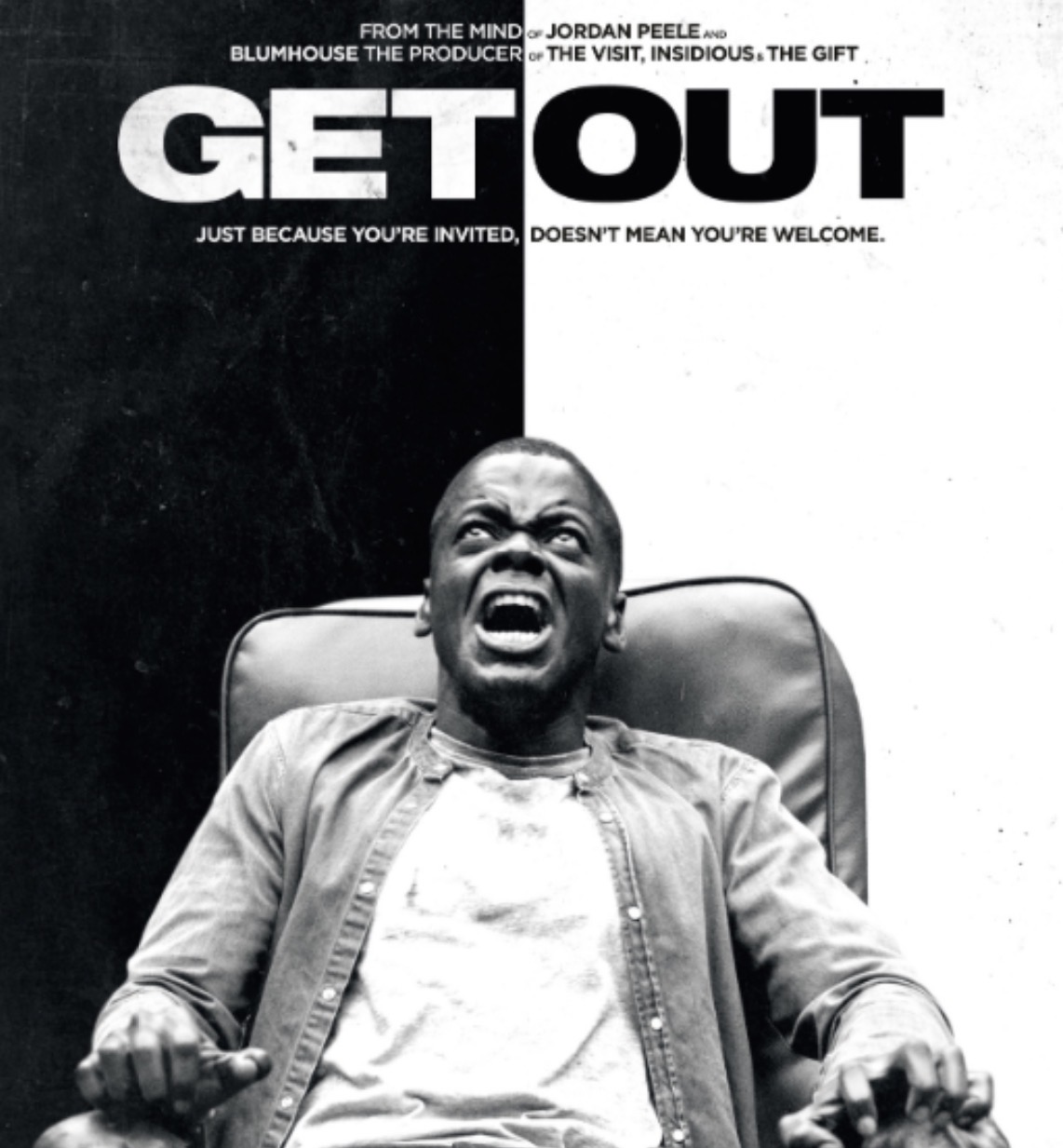
Jordan Peele’s Get Out
Throughout history, horror films have been used to represent societal issues. They showcase topics that are deemed uncomfortable and present them in a way that is hard for the viewer to ignore. In the film Get Out, directed by Jordan Peele, rather than focus on supernatural threats it focuses on the realities of racial tension in society.
By adding a science fiction aspect along with the realistic components of racism, he created an intense movie that showcased the feeling of horror many black Americans feel. Peele incorporated psychological tension, unsettling symbolism and the recurring theme of possession in order to heighten the effects of horror. These techniques allowed the audience to experience the uncomfortable feeling associated with racism regardless of their background.
Suspense
Peele’s use of psychological suspense throughout Get Out directs the viewers into a constant state of restlessness that forces them to be face to face with many forms of racism and micro aggressions that are prevalent today. From the moment that the movie begins Chris, the protagonist, is introduced while being filmed in a sexualized manner. In the opening scene he was filmed being shirtless as the camera switched between him and the pastries that Rose, his girlfriend, was looking at hungrily.
This short detail already draws parallels to her picking out her next victim the way she would pick out a dessert. The tension in the film is built upon from the beginning and only accumulates as Chris is brought into more predominantly white spaces. The tension is not formed through any immediate danger, but through a growing discomfort that intensifies as the scenes progress.
This argument is especially apparent as Chris arrives at the Armitage estate, where the passive feeling of suspense becomes a relevant threat. The small details that are revealed in the opening scenes of Get Out’s introduction slowly build on the suspense, as Chris becomes more of a form of prey rather than a new family member.
When Chris is originally introduced to the family they are overly polite and welcoming which in itself resembles a family trying to support their daughter, but small cracks of unnerving acts still shine through, including the complacent servants and the family continuously mentioning their support of former black president, Barack Obama. These comments that may seem to come from a place of ignorance, reflect a deeper fixation with race that tugs at the back of Chris’s and the viewer’s mind.
These displays of microaggression that only build throughout the movie heavily reflect experiences that black people across the world are constantly experiencing. Although these warnings may seem apparent in hindsight, viewers still can’t put their finger on the source of the threat until later. Scholar Alexandra Hauke in her paper, “Black Im Mobilization, Critical Race Horror…” argues that Get Out follows what she calls “critical race horror.” This tactic exposes how systems of racist control exist in seemingly normal social interactions and environments, but still include “racial silencing.”
Peele allows the camera to linger in those moments in order for the audience to be able to notice the tensions in the scene that mimic real-world microaggressions that black people face. By incorporating these awkward moments into the scenes, Peele uses a form of psychological suspense that leaves the viewer feeling uneasy without being able to name a specific source of it. This portrayal allows the audience to feel a similar unease that Chris feels throughout the movie without the viewer needing to even be from the same demographic as him.
Symbolism
In addition to suspense, Get Out utilizes intense symbolism in order to further expose the feelings of repression that come from racism. The most significant symbol in the film is the “sunken place” where Chris is temporarily trapped after being hypnotized by Missy Armitage.
While being in the sunken place Chris is conscious, but unable to control his body. His loss of control is a metaphor for the forced silencing of black voices in a society that outwardly promotes equality, but still attempts to control and diminish people of color. This is especially evident during the scenes when the help around the house was outwardly seen as black people being truthful about feeling at home at the estate, but in reality, they were being controlled and silenced in their own bodies.
The scene of Chris falling into darkness of the sunken place, emphasizes his isolation at the estate and his complete lack of power in the situation. The sunken place is the physical manifestation of the feeling of isolation and lack of control . Rather than relying on physical violence to convey the horror in Get Out, Peele makes it impossible to ignore the terror that comes from being voiceless and rendered helpless in society.
Alison Landsberg, Professor of History and Cultural Studies at GMU, claims that Get Out serves as a form of “horror vérité.” This is when a film uses depictions of horror in order to display a “truth” that is experienced in systemic racism and involves the viewers in the situation rather than them being detached from it (“Horror Vérité…”). This claim is especially present in the sunken place as the audience is forced into Chris’s perspective and able to experience the terror firsthand.
Not only is this displayed through the sunken place itself, but through the framing of the camera, the background music and the intense introduction to the sunken place. As the camera zooms in on Chris he is forced to maintain eye contact with Missy and is brought back to uncomfortable memories from his childhood. This uncomfortable scene is only amplified by the increasing intensity of the music that soon cuts all together when Chris is fully immersed in the sunken place.
Through these symbolic elements, Jordan Peele shapes Get Out into more than a traditional horror film. Using a unique form of imagery and perspective that is unsettling to viewers of every demographic, he critiques the silencing of black voices in a way that anyone can interpret and feel.
Possession
The final incorporated element that reinforces Jordan Peele’s social critique of racism is the recurring theme of possession. In the context of Get Out, possession serves as a literal and symbolic representation of racial control. The family uses the “Coagula Procedure” to translate the minds of wealthy white people to the bodies of black victims that Rose collects. This procedure strips the original body and soul of its autonomy while replacing its main consciousness with the new host’s.
This possession reflects a deeper social reality of black people being controlled, whether it’s through silencing, racial violence, or inequity. Before Chris was ever fully taken to the sunken place he was being objectified by the people placing bids on him during the silent auction.
Everyone that he was introduced to had something they were looking to take from black people. He was seen as a commodity and a vessel, whether it was for his eyes, athleticism, or even sexual appeal. This racial fetishization is extremely prevalent today and is another form of racism that people often overlook as ignorance or good-naturedness. However, Peele exposes how these seemingly harmless comments are actually deeply rooted in a long history of people objectifying black people and their bodies due to their perceived physical or aesthetic “advantages.”
The silent auction scene only intensifies this idea by removing Chris entirely from the dialogue in order to emphasize the fact that in the family’s eyes, he is nothing more than an object to be obtained. This use of silence reflects the forced erasure of Chris’s identity and the fact that there is nothing he can do to regain it.
Scholar Robin R. Coleman writes that horror films often depict black people as subjects of control as the narratives are shaped around them being displayed as something to conquer (“Horror Noire…”). From when black people were brought to America as slaves to when Jim Crow laws were in place, black people were seen as something to be controlled and used to others’ advantage.
The power dynamic displayed through the physical possession and auctions in Get Out mirrors the metaphorical possession that black people face in society today. This dynamic between the seemingly accepting family and their darker truth brings the hypocrisy of our world to light. Although places may claim to be accepting and a place of equality for all, they have underlying twisted dynamics of power and control that are reflected in Get Out.
Through portraying possession as both a physical and psychological form of control. Jordan Peele forces the audience to confront the disturbing reality that the horror in the film is based on real-world forms of exploitation and control. This fact further allows the concept of possession to be a powerful critique of modern racism.
Closing Out
In the film Get Out Jordan Peele redefines the horror genre by using it as a medium to portray a social criticism of racism. Through his use of psychological suspense, symbolic imagery and the recurring theme of possession, the film exposes the layers of racism that exist in society today.
Rather than relying on traditional elements from horror, Peele establishes an unsettling environment and conveys a feeling of fear through social interactions. This forces the audience to be confronted by their discomfort regardless of their background and whether they can relate to Chris or not. By basing the horror on experiences that many black people in society have lived through, Get Out becomes a reflection of societal structures and connects the fear felt in the movie to the fear black individuals feel today.
As Get Out progresses, these elements work together in order to deepen the audience’s understanding of how racism is still extremely present, whether it’s outwardly apparent at first or not. The psychological suspense places the viewers directly in Chris’s position, which allows them to be extremely aware of the tension formed through the microaggressions and social fetishization towards black people.
In addition, the symbolic elements presented throughout the film, specifically the sunken place, reinforce the feeling of powerlessness that these systems of oppression impose. The incorporation of a possession theme further pushes this sense of exploitation and control. By transplanting the consciousness of white individuals into black bodies, Peele dramatizes the reality that white people use black people for their own gain. This form of possession not only represents the physical control, but the psychological loss of identity that black individuals experience.
Ultimately, these combined effects illustrate that the most terrifying aspects of Get Out are not supernatural, but are rooted in and are a reflection of real-life social structures, exploitation and microaggressions.
I know this one was a little longer and denser than usual, but I hope you still had some interesting reflections on the movie. (And if you haven’t seen it yet I highly recommend you do and check out some more of Jordan Peele’s work)
Loguess